Purpose
The purpose of this Quick Reference Guide (QRG) is to provide a step-by-step explanation on how to Review all Pending Inventory Transactions in the North Carolina Financial System (NCFS).
Introduction and Overview
This QRG covers the review of all pending Inventory Transactions in NCFS which will enable you to review Inventory Transactions that need action taken during a specific period. A pending transaction is either a transaction that's been loaded into the interface table and waiting to be executed, or a transaction that's been executed, but resulted in an error. Reviewing these transactions, correcting those in error, and resubmitting them efficiently is key to ensuring an accurate on-hand quantity picture and cost accounting. Now you can review your pending transactions using a Redwood page.
View Pending Inventory Transactions
To view pending inventory transactions in NCFS, please follow the steps below:
Step 1. Log in to the NCFS portal with your credentials to access the system.
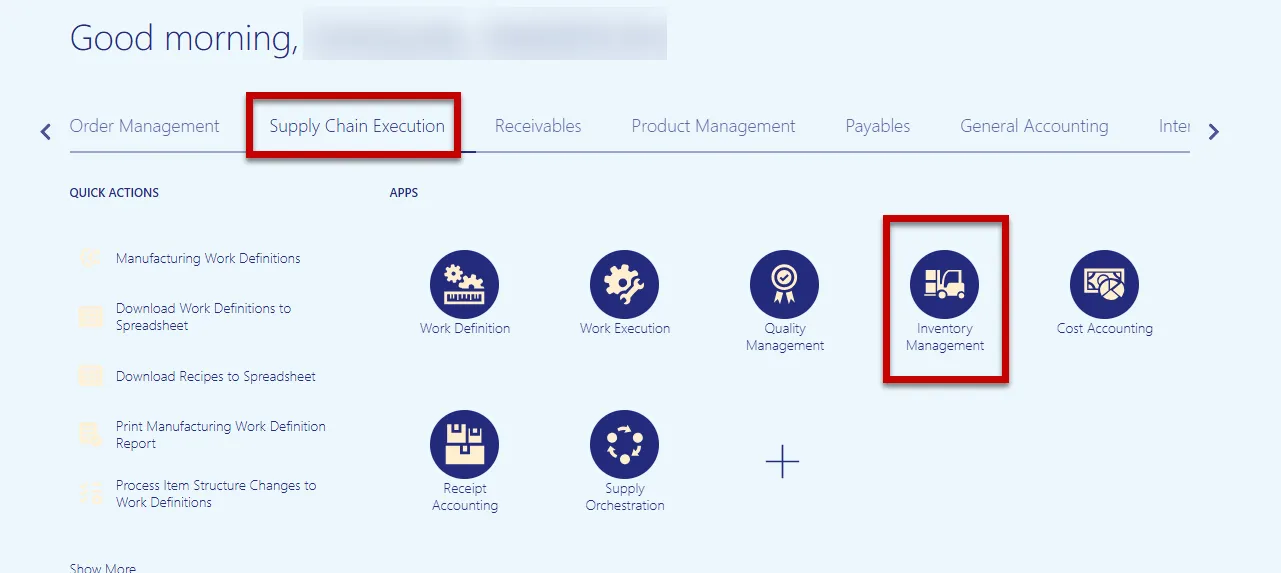
Step 2. On the Home page, click the Supply Chain Execution tab and then click the Inventory Management task.
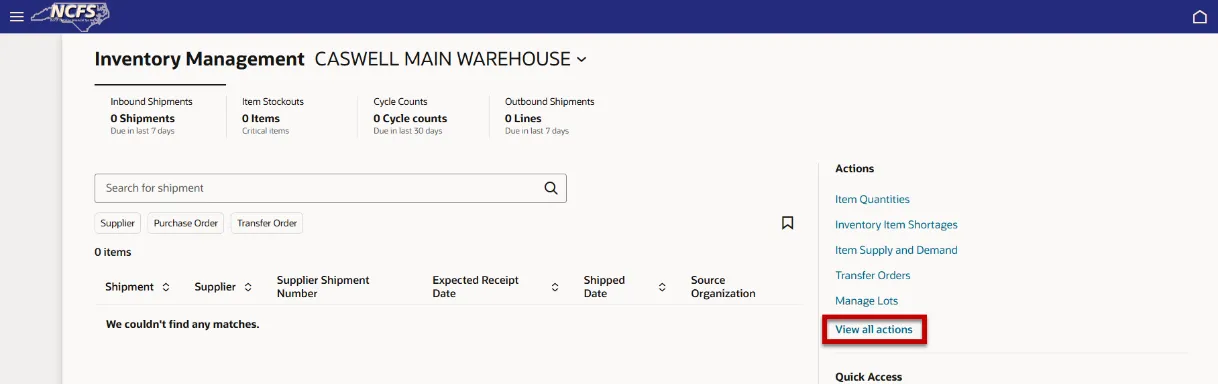
Step 3. On the Inventory Management page, click on the View all actions hyperlink.
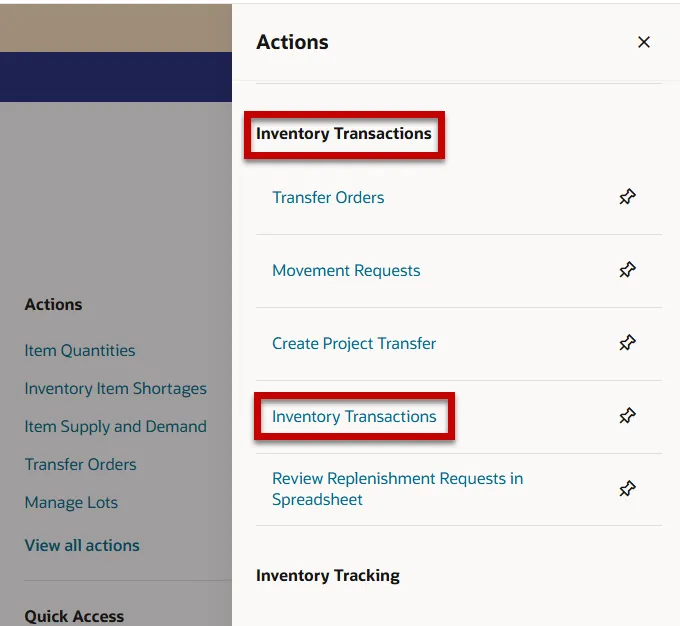
Step 4. Under the Inventory Transactions section, select Inventory Transactions.
Step 5. The Pending Transactions task defaults and is the first tab at the bottom of screen.
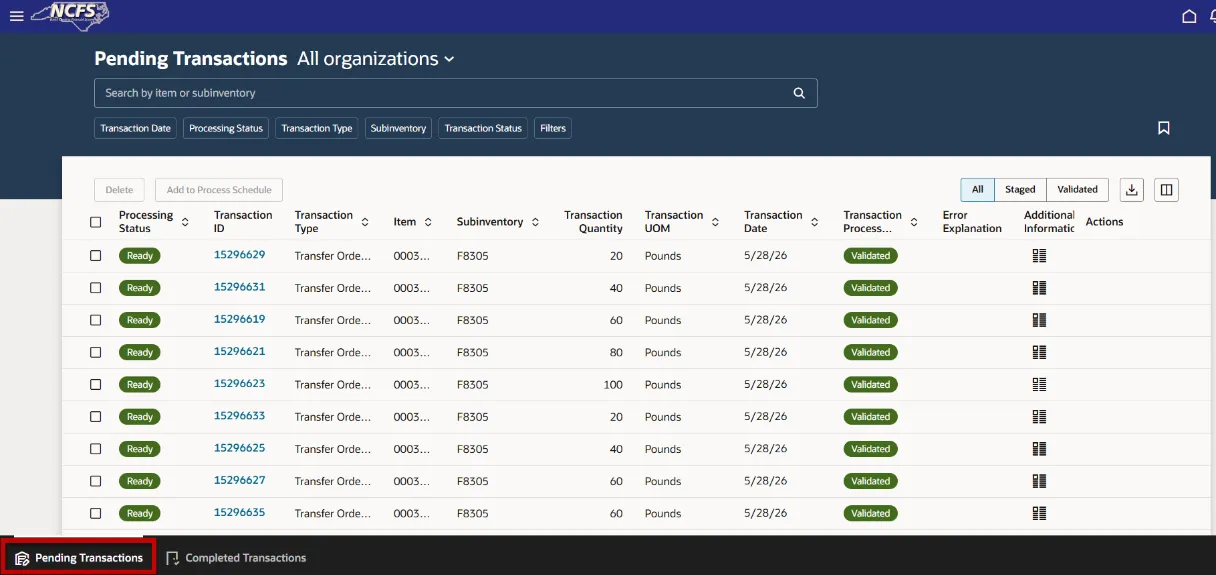
Step 6. “All Organizations” defaults and will allow you to view all completed transactions for all inventory organizations you have security access to. Click the drop-down arrow to select one inventory organization to filter on.
Note: You can search inventory organization by both number and name.

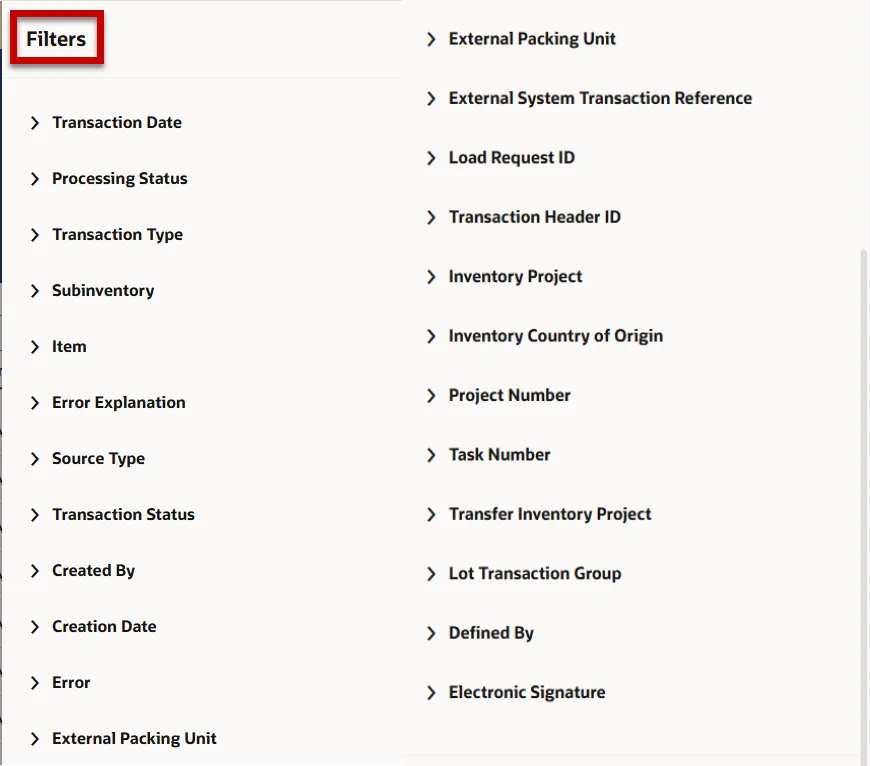
Step 7. Displayed Commonly used filters include:
- Transaction Date
- Processing Status
- Transaction Type
- Subinventory
- Transaction Status

Step 8. A full list of filter options can be found by clicking the Filters tab.
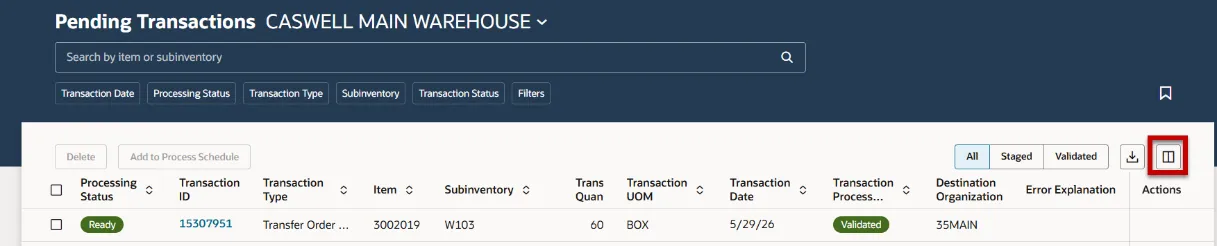
Step 9. Click the Customize Columns button to add/remove columns.
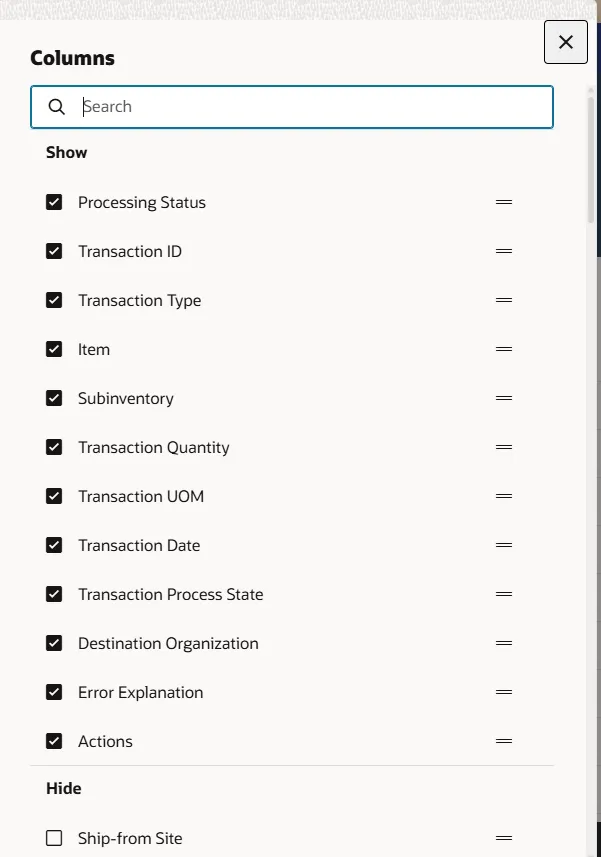
Step 10. Add/Remove columns you deem essential.
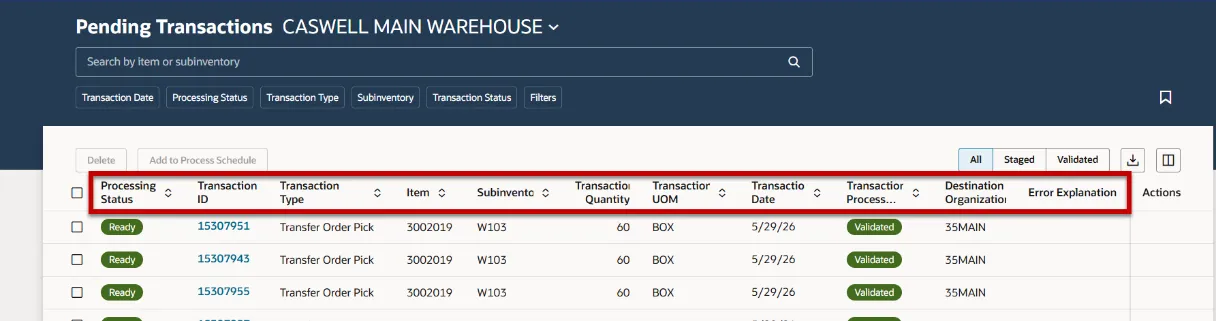
Step 11. Review the new columns and update as needed.
Step 12. Select the Processing Status to filter by the following statuses.
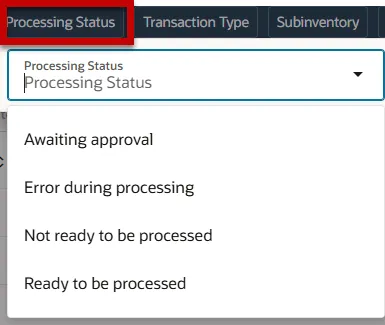
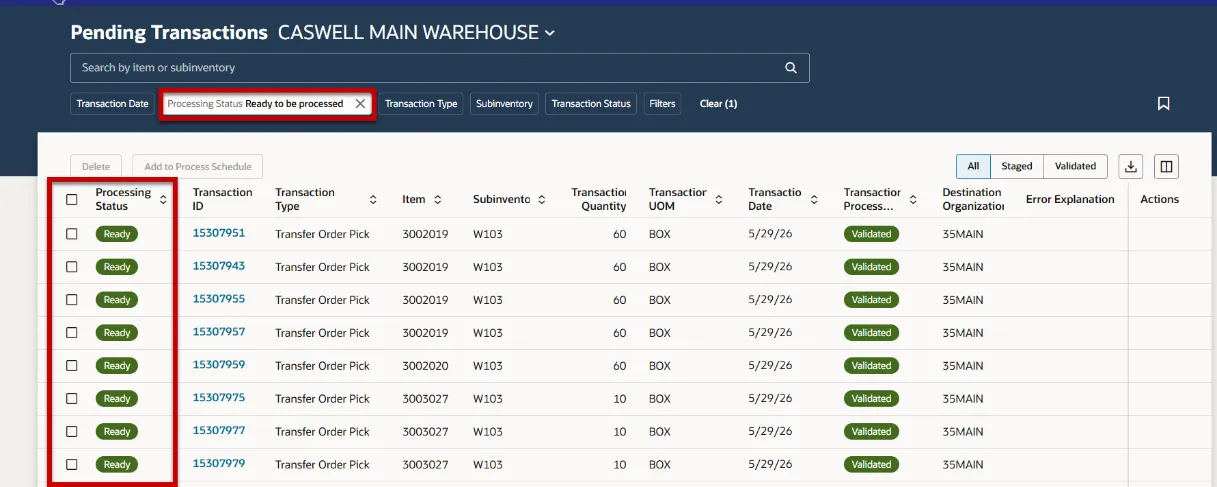
Step 13. Select Ready to be processed status to view transactions that are awaiting system processing.
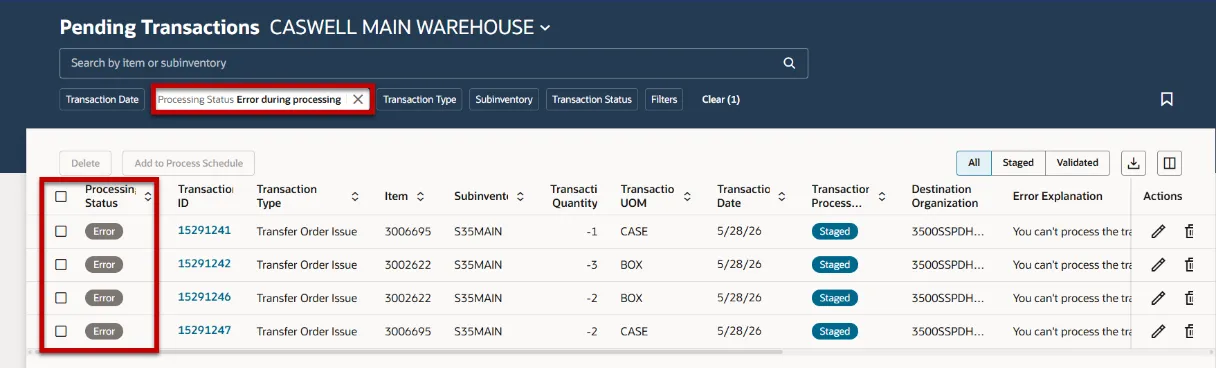
Step 14. Next, select Error during processing status to view any transactions that errored out during the validation process.
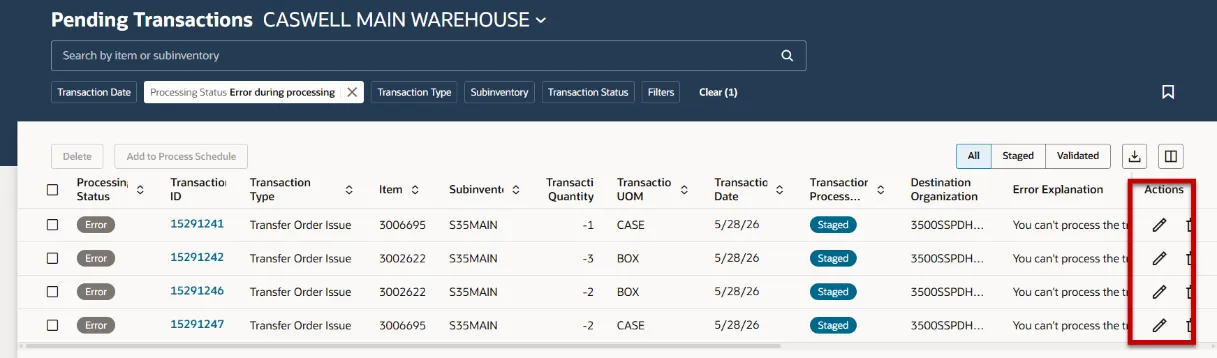
Step 15. To remedy the transaction error, click the edit pencil icon under Actions to view the transaction details.
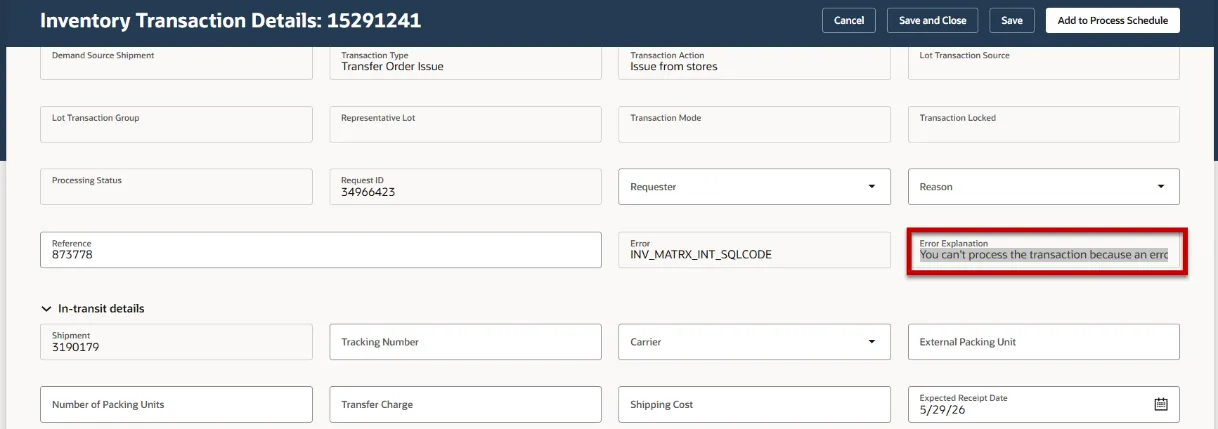
Step 16. On the Inventory Transaction Details page, scroll down to the Error Explanation field.
Note: Sometimes the error explanation is so long and not completely viewable. Double click the error explanation and paste it in a word document to view. Example: You can't process the transaction because an error occurred in the inv_tm_mgrs.update_on_hand-17 procedure. Error: ORA-01001: invalid cursor. (Contact the NCFS call center at NCFS@ncosc.gov if assistance is needed).
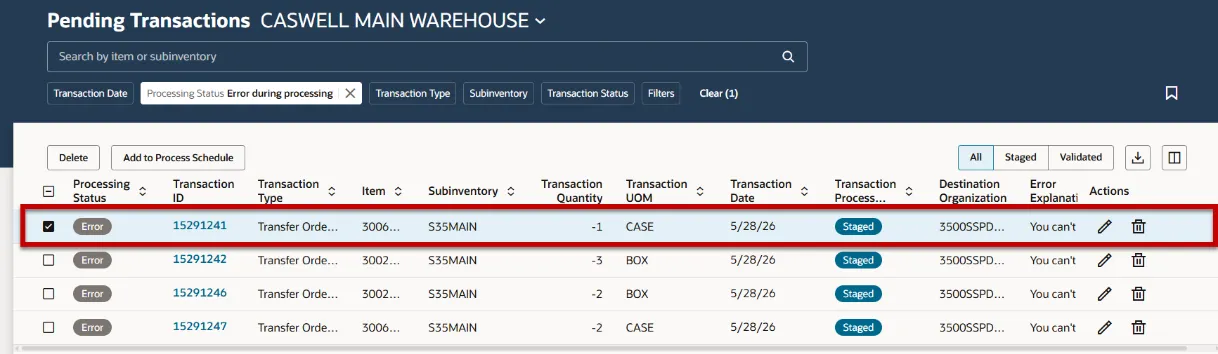
Step 17. Once the error has been corrected, select the appropriate transaction(s) and click the Add to Process Schedule button. The transaction(s) are now scheduled to process when the Manage Inventory Transactions ESS job runs overnight.
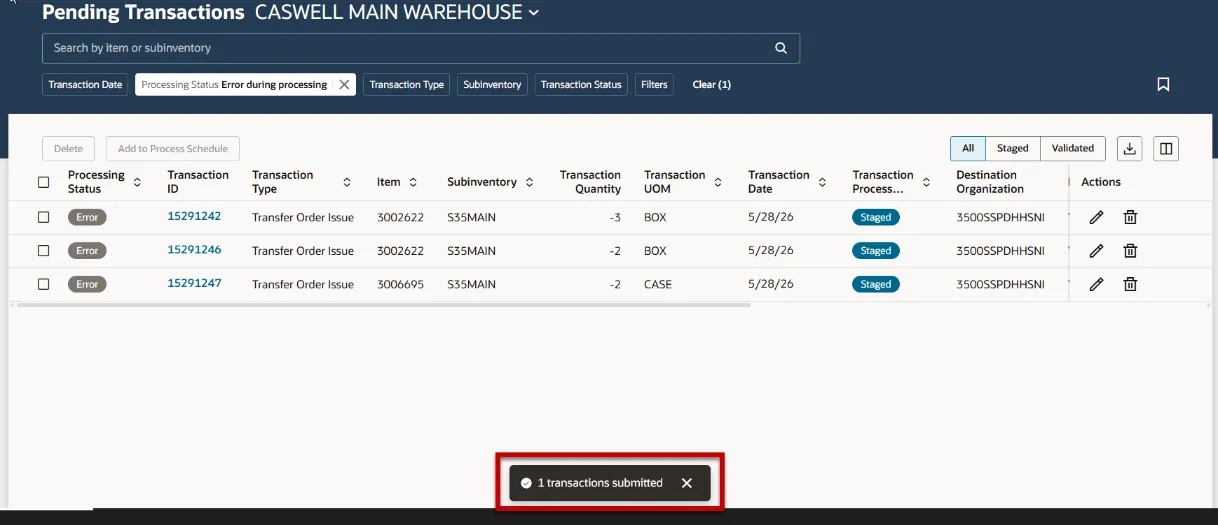
Step 18. A pop-up message will appear to indicate the transaction was submitted.
Step 19. To view transaction details, click the Transaction hyperlink.
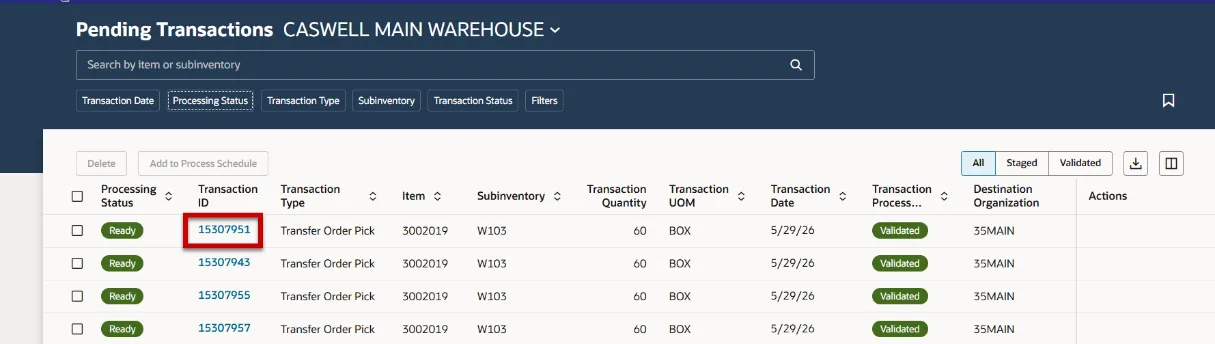
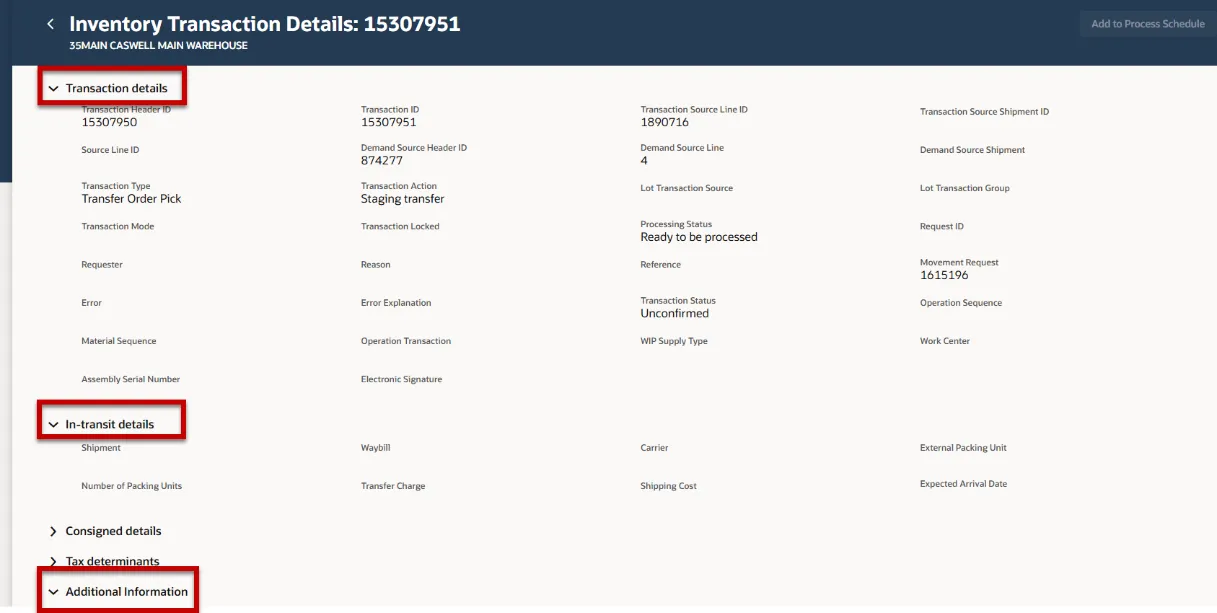
Step 20. Location, Transaction, In-transit, and Additional Information details can be viewed under Inventory Transaction Details screen.
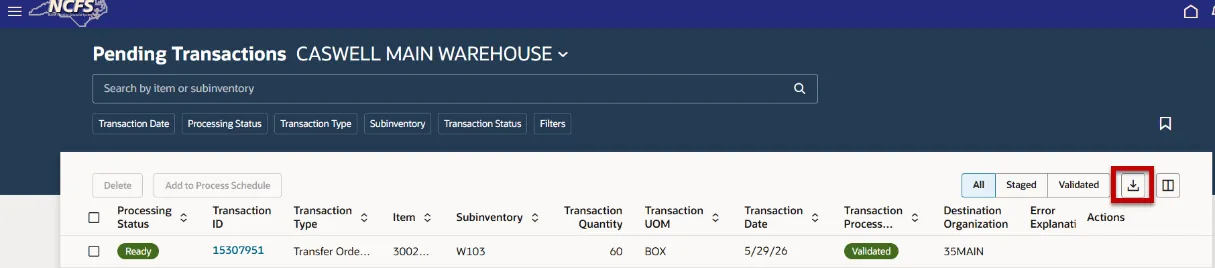
Step 21. To export data into an Excel worksheet for further analysis, click the Export button.
Step 22. This feature allows you to perform further analysis in an Excel worksheet.
Note: The Export feature will only export records that have been viewed on the NCFS screen and side scrolled down to. This is a known issue Oracle is currently working to remedy.
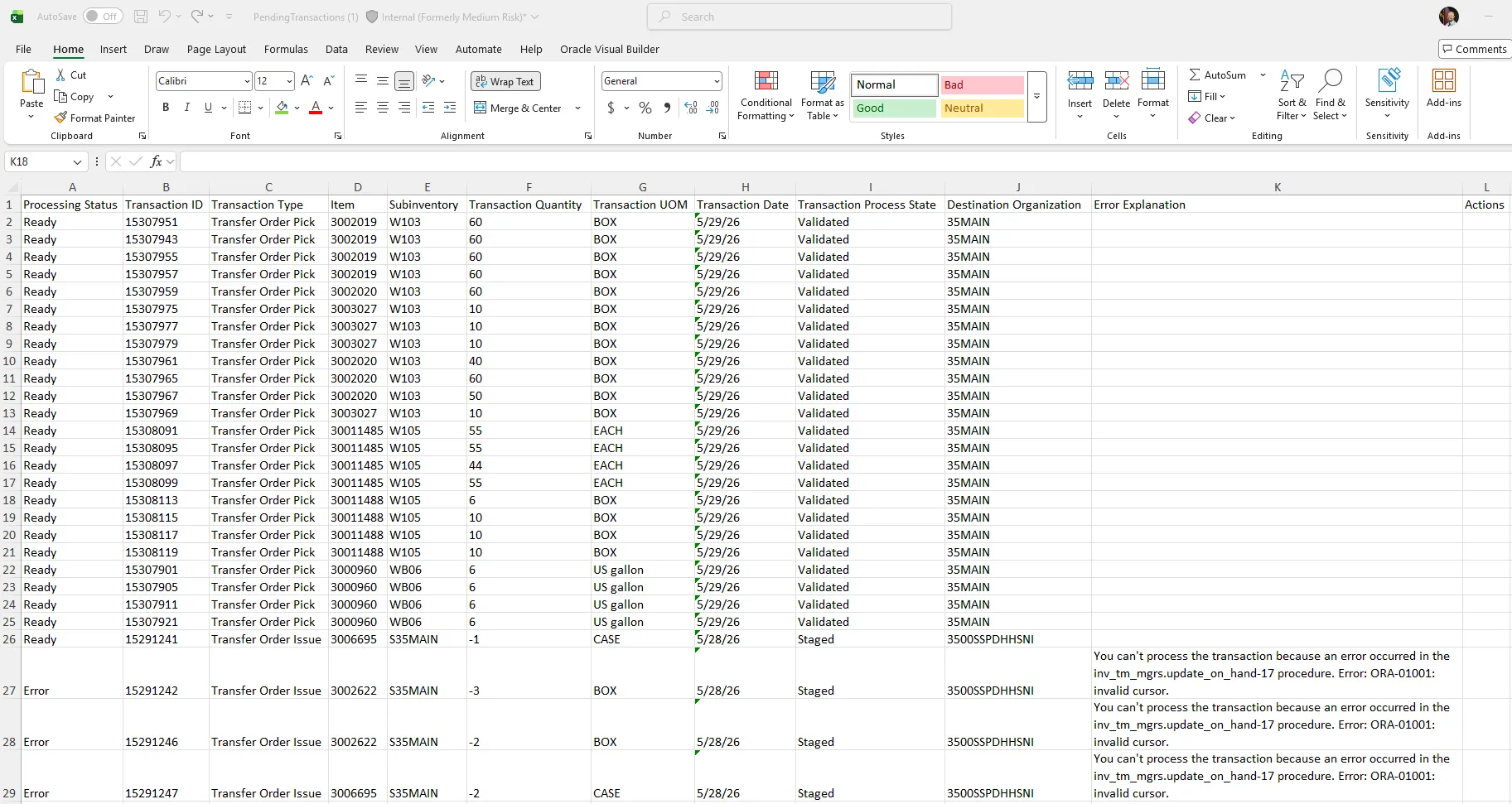
Step 23. Pending Transactions have not processed in the NCFS system. Take appropriate action needed based on Error and Error Explanation. Contact the NCFS@ncosc.gov Call Center to log a ticket if a resolution cannot be determined by your agency.
Wrap-Up
View pending inventory transactions using the steps above in NCFS.
Here's what you can do on the Pending Transactions page:
- Review pending transactions
- Process pending transactions
- Delete pending transactions
There are three toggle buttons to sort items based on their transaction process state:
- All: Displays both staged and validated transactions
- Staged: Displays only staged transactions
- Validated: Displays only validated transactions
- To retrieve specific information about pending transactions, enter any relevant search criteria. You can also access lot and serial details for items that are lot controlled, serial controlled, or both, if applicable.
- Use additional filters to refine your search and select the Columns option to add more fields for display on the landing page.